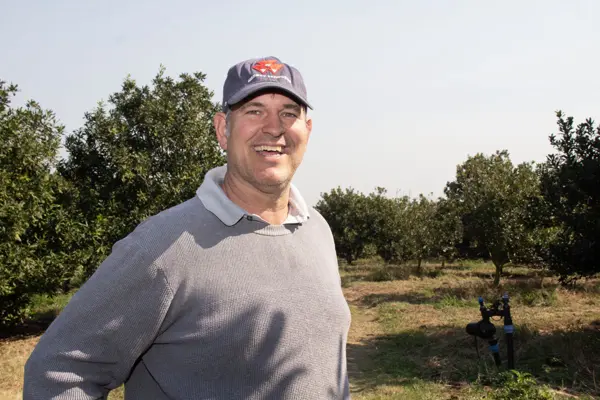
Cutting his coat to suit his cloth while farming for the bigger picture are essential ingredients in the recipe for successful macadamia and sugarcane farming at Chantilly Farm on the KwaZulu-Natal North Coast.
By Colleen Dardagan
By the time the 2016 rains had put an end to one of the region’s worst droughts on record, KwaZulu-Natal sugarcane farmer Dieter Lütge had made up his mind that mono-cropping was not only a risk, but unsustainable.
Lütge, whose Chantilly Farm is a short distance from the village of Darnall on the KwaZulu-Natal North Coast, said he chose to plant macadamias in 2016 despite knowing he was behind the development curve.
Industry figures show that nut prices had risen from about R48 000 per ton dry nut-in-shell in 2014 to R70 000 per ton dry nut-in-shell in 2016. The price then peaked in 2020 at about R84 000 per ton dry nut-in shell, declining to between R50 000 and R55 000 per ton dry nut-in-shell last year. At the same time, production costs increased from less than R59 000 per hectare in 2019 to more than R78 000 per hectare in 2025. Online sources suggest production costs in 2014 were as low as R15 000 per hectare!
However, Lütge is unfazed by the rollercoaster ride. “We did things completely differently here. Everything was on a cash basis. We started off with a 10ha block. We bought the trees, planted them and did what we had to do to make sure they were okay and that was that.”
Tree varieties include Belmonts, Nelmac 2s, 816s and 814s which are now producing on average 500kg per hectare depending on the age of the tree.
As sugar prices improved between 2019 and 2022 and more money became available, another 10ha of land under sugarcane was converted to macadamia orchards. “The goal – which we have now achieved – was to have half of our income coming from the macs and the other half from sugarcane. Also, you must remember the pay cheque for the macs comes at a good time in the year as it’s paid earlier than sugarcane,” he added.
Gary Latham from AgriBiz was handed responsibility for the integrated pest management strategy at Chantilly Farm and from the start, was given a budget and asked to make it fit. “We were not going to borrow money. I am not a fan of the banks. We never have been in a financial situation where we’ve had to sweat. When I go to bed at night, I sleep very soundly knowing that I don’t owe anything to anyone,” Lütge said.
Now with 60ha under orchards Lütge says any returns from the trees are “pure profit”.
Latham still visits the Chantilly orchards on a weekly basis and says his secret to staying within the budget is staying ahead of the pests. “Regular scouting is the secret, as is our use of soft chemicals to target nut borer and stinkbugs,” he said.
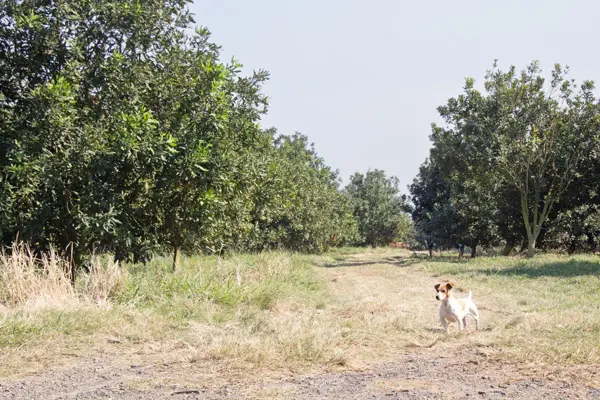
Pest numbers in the trees are also kept at bay by substantial natural and indigenous growth of grasses, flowering plants and weeds in the inter-rows. “I mow between the trees just before the harvest and that’s it. I don’t mow again. It makes sense that insects prefer feeding in a natural habitat environment rather than on the trees,” Lütge said.
Once the trees started to bear Lütge and his neighbour, Kim Hagemann, established a de-husking and drying plant in partnership, building the facilities at Hagemann’s Bethany Farm. “We built the plant when we had the cash on hand to do it and we share the operational costs between us,” Lütge said.
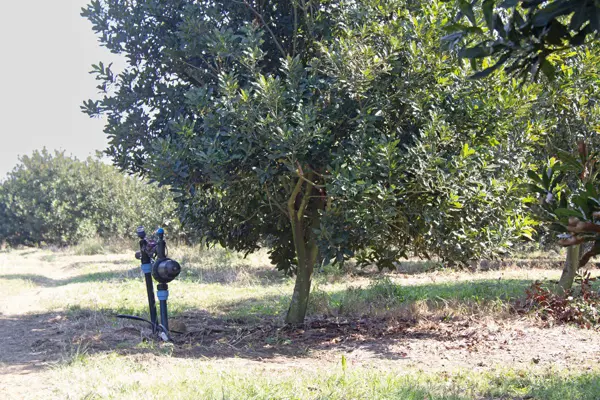
Having secured water rights from the nearby Nonoti River, drip irrigation is being installed with a view to introducing fertigation in time. “What I really like about the drip system is that it’s easy to clean and it isn’t an issue if the pipes become covered by the mulch under the trees. The only small problem we have are Banded Mongoose. They bite into the pipes in search of water,” he said.
Also, when the trees were very young, the 20 or more resident duiker were considered a real problem as they nibbled on the leaves during their nocturnal foraging. “I was going to eliminate them,” Lütge said, “but then I realised they were actually doing me a favour as they were pruning the trees naturally. The beautifully shaped trees that you see in our orchards are thanks to the duiker.”
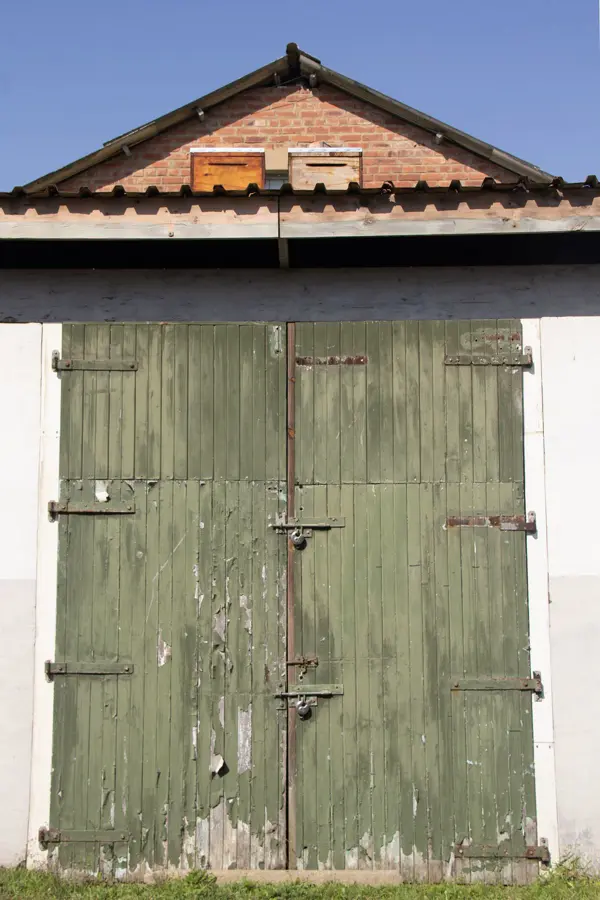
Chantilly Farm was settled by Rudolf Dittrich, a German missionary who started growing sugarcane in 1886. Old hand-written records show how the virgin soils produced substantially more sugarcane per hectare in those early years, but a longstanding green harvesting tradition meant the clay-rich Dwyka soils were in excellent condition when it came to putting in the young macadamia trees.
“The sugar industry crisis means it is no longer viable to green harvest, so we have had to change over to burning the crop, which is unfortunate. However, I firmly believe that demand for improved air quality will increase as property development keeps pace with the population growth in this region. We will be forced to go back to trashing, which will be a good thing,” Lütge said.
There have been some important lessons since 2016 when the first 10ha of macadamia trees were planted. “The very first orchards we developed were all on flat land. I took a decision not to ridge the soil as a result. That was a mistake. The orchards we developed later were on sloped land and we ridged. The difference in the growth between the trees planted in those original orchards and those in the sloped orchards is like chalk and cheese,” he said.
Soil testing is also non-negotiable, according to Lütge. “The whole farm was tested in 2021, then we split the farm into four, with 20 fields tested each year. In 2025 we tested the whole farm again. This is so important particularly in the drier years when the plants don’t take up as much fertiliser, resulting in an increase in acidity. We don’t compromise on soil testing,” he added.
While Lütge says he is not a particular fan of technology, he accepts that applications that help farmers to become more precise and effective are invaluable. “We also signed up for the sugar industry’s SUSFarms® management system four years ago and that has proven vital to our sustainable and self-sufficient farming aims,” he said.
Farming with the bigger picture in mind is at the heart of every action or decision taken by the Lütge family while depending on trusted and long-standing relationships between consultants and advisors such as Latham.
“This farm has been in my wife Rita’s family since the 1880s. I am not farming for me, I am farming for my boys, Max and Harry. I want to make sure that by the time they come back to the farm everything is set up for them. Every decision that I take today is about what is best for our family and the future of the land. That is the legacy I am building,” he said.