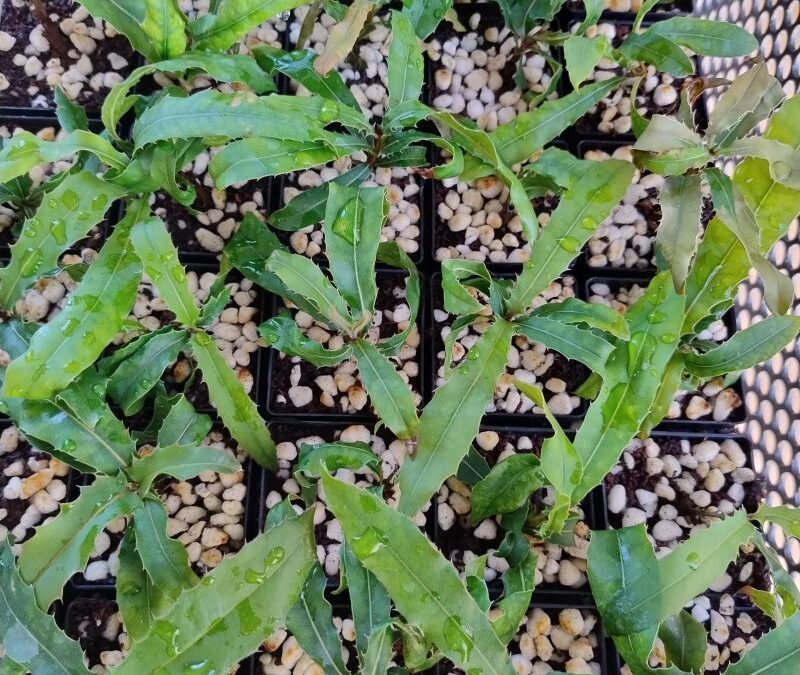
Australian scientists are using green biotechnology to accelerate conservation banking efforts of six of the country’s exceptional priority plants, including the indigenous macadamia, M.jansenii.
By Colleen Dardagan
The project, led by Alice Hayward, a Plant Molecular Physiologist and Senior Research Fellow at The University of Queensland, is funded by the Australian Research Council.
The central aim of the project is to respond to the country’s “urgent biodiversity crisis”, in which many native plants, including the critically endangered Macadamia jansenii, are facing significant threats in the wild.
Hayward says she and her team hope to provide new knowledge into M.jansenii propagation technology and cryopreservation, as well as safeguarding the genetic diversity of this and other species at the Australian PlantBank.
Cryopreservation – according to an online AI enquiry – is the process of cooling and storing biological materials, such as cells, tissues or organs, at temperatures as low as -80°C to 196°C, to stop metabolism and prevent decay, preserving them for future use.
M.jansenii is critically endangered and as a homegrown species on the Australian sub-continent, Haywood says the country has a custodial responsibility to protect the genetic diversity of the species and its eco-systems.
Denise Bond, who heads up the Wild Macadamia Conservation body in the country, said the main threats to the wild macadamia populations were weeds and fire, which threatened the narrow remnants still growing along waterways that provided “critical stepping stones” for cross pollination between the wild trees.
Some of the last remaining remnants of ideal wild macadamia habitats are threatened mainly by invasive vine species like the Cat’s Claw creeper (Dolichandra unguis-cati). In South Africa, the creeper has similarly become a significant invader in cultivated orchards, riparian corridors, natural forest remnants and disturbed areas such as roadsides and urban spaces. The plant was introduced into countries including Australia, New Zealand, India, Mauritius, China, the United States and South Africa, as a garden plant indigenous to South America.
Wild Macadamia Conservation (WMC) authorities in Australia have now set out a specific and targeted strategy to tackle the weed, among a raft of issues in each of the scattered and small remaining areas where the wild macadamia is still holding on.
For example, in Bulburin National Park, north of Brisbane, the WMC is a member of a consortium managing an AUS$500 000 grant from the government to combat the creeping vine and the damage caused by wild pigs.
The indigenous Macadamia tetraphylla has the least amount of protected area remaining and the smallest, least connected remnants, mainly in New South Wales.
Bond said while there are healthy populations listed on their database, they were small, disconnected and threatened by weeds. “We are in the process of development partnerships with First Nations communities to work together to protect the habitat,” she said.
Excerpts in this story were sourced from the regular Wild Macadamia Conservation newsletter.

By Colleen Dardagan
The annual “one-stop-shop” AmberMacs Industry Day held in February was a cracking success. More than 3 000 people visited the two-day event and 145 industry suppliers and services exhibited – 80% of the exhibitors were at the show for the first time. Also, for the first time, the organisers hosted a networking breakfast attended by delegates from all spheres of the agriculture sector.
AmberMacs’ Andri van den Bergh said the event was an opportunity for industry role players and farmers to share ideas and exchange information. “Although the focus is mainly on macadamia production, this is a one-stop shop for any farmer in South Africa,” she said.
Guest speaker and economist Dawie Roodt told those attending that while South Africa’s government had made good progress in putting the country on an improved trajectory, there was still much to be done.
Doing away with legislation such as Expropriation without Compensation, the proposed National Health Insurance plan and Broad-based Black Economic Empowerment, Roodt said, could increase GDP from the paltry 1.1% predicted for this year to at least 6% annually.
The sixth annual Amber Macs Industry Day is scheduled for February 4 and 5, 2027.

Academics and NGOs are turning to macadamias for food security and crop diversity in southern Ethiopia and Malawi, where traditional crop yields are plummeting due to the impact of climate change.
By Colleen Dardagan
Scaled macadamia production in Ethiopia has the potential to stave off food insecurity while simultaneously revitalising and restoring degraded agricultural land, according to a study by forestry development officials and academics in Addis Ababa.
Titled Macadamia integrifolia farming for sustainable development: Global experiences, opportunities and challenges for scaling up1, the 2025 study concludes that macadamias have “crucial” nutrients able to address malnutrition while warding off heart disease.
Further development of orchards in degraded or “sparsely treed agricultural and forest lands” has the potential for environmental restoration and the promotion of agroforestry or food forests that would not only mitigate food insecurity but alleviate land degradation that is particularly acute in tropical and Sub-Saharan Africa.
Macadamia nuts are rich in plant-based protein, fibre and energy-dense healthy fats, especially monounsaturated fatty acids and, according to the study, offer about 718kCAL per 100g of edible nuts, containing 14g of carbohydrates, 9g of dietary fibre, 8g protein and 76g of total fat and no cholesterol.
Additionally, the nuts contain antioxidants that modulate platelet activation and thrombosis and influence key cellular functions like mitochondrial activity and energy homeostasis, which support cardiovascular health.
The study describes macadamia production as a recognised pathway to poverty alleviation and improved livelihoods.
“The crop’s high market demand, both locally and internationally, provides smallholder farmers with a lucrative income source, thereby strengthening household food security. The integration of macadamia farming into existing agricultural systems can diversify income streams and reduce dependency on staple crops vulnerable to climate variability,” the research adds.
As an example of potential returns, South Africa’s macadamia farmers are estimating a return of R55/kg dry nut-in-shell at 2.5 tons dry nut-in-shell per hectare on average for the 2026 harvesting season.
Yitayal Addis Alemayehu who is an Assistant Professor in the Department of Environmental Management, and Director for Community Engagement at Kotebe University of Education in Addis Ababa, and one of the authors of the study, said the development of macadamia orchards also showed promising potential in environmental remediation, especially in improving water quality through bio-waste applications. He said early research had shown that activated carbon derived from the nut shells effectively removed water pollutants like chromium and methylene blue.
“Implementing pilot-scale phytoremediation systems using macadamia waste, particularly in constructed wetlands and riparian buffers, could offer low-cost, community-based water treatment options for rural populations suffering from deteriorating water quality,” he said.
Furthermore, he added, the trees act as carbon sinks, absorbing carbon dioxide and thereby mitigating climate change.
“The perennial nature of the trees means they foster a stable microclimate able to boost microbial activity, organic matter accumulation and nutrient cycling, so they strengthen long-term soil fertility, promoting climate-smart agroforestry and ecosystem resilience,” Alemayehu notes.
The philanthropic, Christian-based Integra Foundation introduced macadamia production in 2018 to Ethiopian coffee farmers whose livelihoods are increasingly threatened by the changing climate, particularly in the south of the country.
In a 2025 article published in the organisation’s newsletter, Integral3, Veronika Macsai, who is the Integra Director of Programmes, said the more than 15 million Ethiopians dependent on their coffee crop for income were becoming increasingly vulnerable as rising temperatures, erratic rainfall and new pests were hollowing out yields, particularly in the southern regions of Guji and West Guji.
She said the need for long-term, sustainable solutions able to build resilience among rural subsistence farmers was critical. “Since 2022 we have distributed more than 80 000 macadamia tree seedlings imported from Kenya, and built a local nursery in Bule Hora to grow grafted trees suitable for the Ethiopian conditions.”
The work was recently expanded, with plans to plant another 100 000 trees and provide training and information to a further 3 000 smallholder coffee farmers.
“We’re now seeing the first signs of flowering and nut formation on the early trees,” she said.
While the farmers had yet to harvest a crop, Macsai said they believed it was “on its way”.
The trees could continue to bear for at least 100 years, meaning the project was not only about helping subsistence farmers to survive,
but to adapt and thrive.
The Integra project has provided employment and downstream value-adds, such as farmer training, employment at their nursery and processing plant, as well as the creation of a model agroforestry farm and education centre at Bule Hora.
Similarly, research coming out of Malawi – the single most food-insecure country in Africa – suggests that the exponential growth of hectares under macadamia orchards in recent years would allow the country to use the nut to supplement local diet, which is heavily dependent on white maize.
In 2024, Dr Emmanuel Junior Zuza, a Senior Lecturer in Environmental Management and Sustainability at the Royal Agricultural University in Britain, wrote in his study titled Macadamia Nuts as a Supplement to Cereal-based diets in Malawi that the rapid expansion of orchards in the country offered potential benefits beyond just providing employment.
Currently, white maize accounts for more than 54% of the national caloric intake and is extensively cultivated across Malawi, with cassava, another vital food staple, providing about 15% of the calories consumed by the local populace. Rice, sorghum and millet are also traditional cereal crops, providing essential calories, nutrition and resilience for smallholder farmers.
According to Zuza, smallholder farmers in Malawi cultivate about 4.5 million hectares and occupy about 80% of all agricultural land. The estimated 2 million smallholder farmers contribute about 25% of the country’s GDP, 95% of the total agricultural labour force and nearly 70% of the agricultural produce, especially common beans, groundnuts, maize, soybeans, sunflower and tobacco. In fact, until recently, tobacco was the country’s main agricultural export, with about 95% of production on smallholder land.
“The government has recognised the need for crop diversification and is advocating for groundnuts, coffee, macadamia nuts, soybeans and sunflowers as suitable supplements to the smallholders’ maize-based diets and as an alternative to cash crops like tobacco and tea,” Zuza said.
He added that the macadamia nut crop was particularly appropriate. “It is nutrient-dense, requires minimal maintenance, and the nuts fetch high market prices. Moreover, the first harvest of the crop is in January and February, when the annual staple crops have yet to mature. This means macadamias are an essential resource for improved food security when other foodstuffs are in short supply and expensive,” he said.
Research shows that as a country experiencing significant warming from climate change – 0.9°C from 1961 to 2021– Malawian smallholders who already grow macadamia trees were better off in terms of resilience during the recent extreme tropical storms Ana (2015) and Idai (2019). “This is because the trees and field crops growing under the trees were not affected by the cyclones. Farmers were able to harvest some of their field crops, in addition to the macadamia nuts. On the other hand, non-macadamia smallholders lost half of all their crops,” Zuza said.
In both the Ethiopian and the Malawian studies, the researchers agreed that the development of macadamia orchards would not only contribute to food security and a healthier population but offered a unique opportunity to drive economic growth in deep rural regions.
The academics also agreed that their respective governments must act strategically to promote the expansion of the crop in areas where they were adapted. In other words, giving careful consideration to the current and projected suitable areas for production while allowing for environmental and socio-economic factors.
Critically, both studies say that integrating the production of macadamias offers vast potential to provide food security through resilience, particularly in Malawi, where the nuts can offer a highly nutritious alternative to the cereal-based diet of subsistence farmers in a country that is facing a 1.2 million metric ton food shortage in 2026.
Acknowledgements:
Macadamia integrifolia farming for sustainable development: Global experiences, opportunities and challenges for scaling up : Yitayal Addis Alemayehu, Bewketu Mamaru Mengiste, Gebrie Tsegaye Mersha, Adrian Sirage Ali, Eguale Tadesse Kifle (2025)
Macadamia Nuts as a Supplement to Cereal-Based Diets in Malawi : Emmanuel Junior Zuza, Abdulmumin Opeyemi Muhammed, Andrew Emmott, Rick L. Brandenburg and Yoseph N. Araya (2024)
A Hope Taking Root: Climate Resilience through Macadamia in Ethiopia : Integral May 23, 2025 Veronic Macsai, Integra’s Director of Programms.
While macadamia nut prices on the world’s markets are yet to return to pre-Covid highs, the industry continues to grow, particularly on the African continent where countries are looking to the crop for food security and much-need foreign currency.
In statistics compiled by industry expert and consultant Philip Lee, Malawi has tracked the highest growth in tree planting since the 1980s, with 5 000 trees planted that year, compared with 400 000 young trees going into the ground in 2019. However, new plantings have declined significantly post the pandemic, with 300 000 young trees planted in 2020, 250 000 in 2021 and 2022, 200 000 in 2023, and 100 000 in 2024. Last year commercial growers in the landlocked country planted just 50 000 trees. In 1990, Malawi produced 380 tons DIS with a predicted harvest in 2030 of 23 084 tons DIS.
Dr Emmanuel Junior Zuza from Britain’s Royal Agriculture University said while Malawi had exponentially expanded its orchards, most of the trees had yet to come into production. “You will find that Malawi is about the seventh or eighth largest producer of macadamia nuts in the world.”
While Ethiopia is yet to register the development of commercial orchards, orchards have been planted for research purposes, according to academic Yitayal Addis Alemayehu from the Kotebe University of Education’s Department of Environmental Management in Adis Ababa. He said the Ethiopian government was committed to advancing the crop as an alternative to coffee-growing by smallholder farmers in the southern regions, where production dropped by between 5% and 7% in 2025 due to the impact of climate change. This is despite a 9% increase in the country’s overall coffee production last year. Trees for the research programme were imported from Kenya where in 1980, 100 000 trees were planted, with the numbers of young trees being planted climbing to a high of 140 000 in 2016.
The bulk of Kenya’s macadamia crop is produced by about 200 000 smallholder farmers, with production increasing from about 23 960 tons DIS in 2010 to 46 500 tons DIS last year. The country is predicted to produce up to 51 000 tons DIS in 2030.
Notably, the Kenyan crop is produced with little to no pesticides or herbicides, which is a model that Ethiopia is hoping to emulate as demand for organically grown produce grows, particularly in Europe.
Interestingly, in 1990, Kenya was the leading producer of macadamias on the continent producing 3 040 tons DIS compared with South Africa’s
1 415 tons DIS.
Today South Africa is the largest producer in the world, with 114 738 tons DIS harvest expected this year compared with 47 000 tons DIS in Kenya. In 2030, South Africa is expected to produce 191 809 tons DIS compared with Kenya’s 51 470 tons DIS.
Countries like Rwanda have also started producing macadamias, with 50 000 young trees planted each year between 2016 and 2018. However, that figure has declined significantly to just 5 000 trees last year. In Mozambique, plantings also peaked during the same period with 130 000 trees going into the ground each year between 2018 and 2020. Rwanda is predicted to produce 23 000 tons DIS by 2030 and Mozambique 6 000 tons DIS.
s Dr Emmanuel Junior Zuza, a Senior Lecturer in Environmental Management and Sustainability at the Royal Agricultural University in the UK, says macadamia nuts offer a nutritious and vital supplement for Malawians.
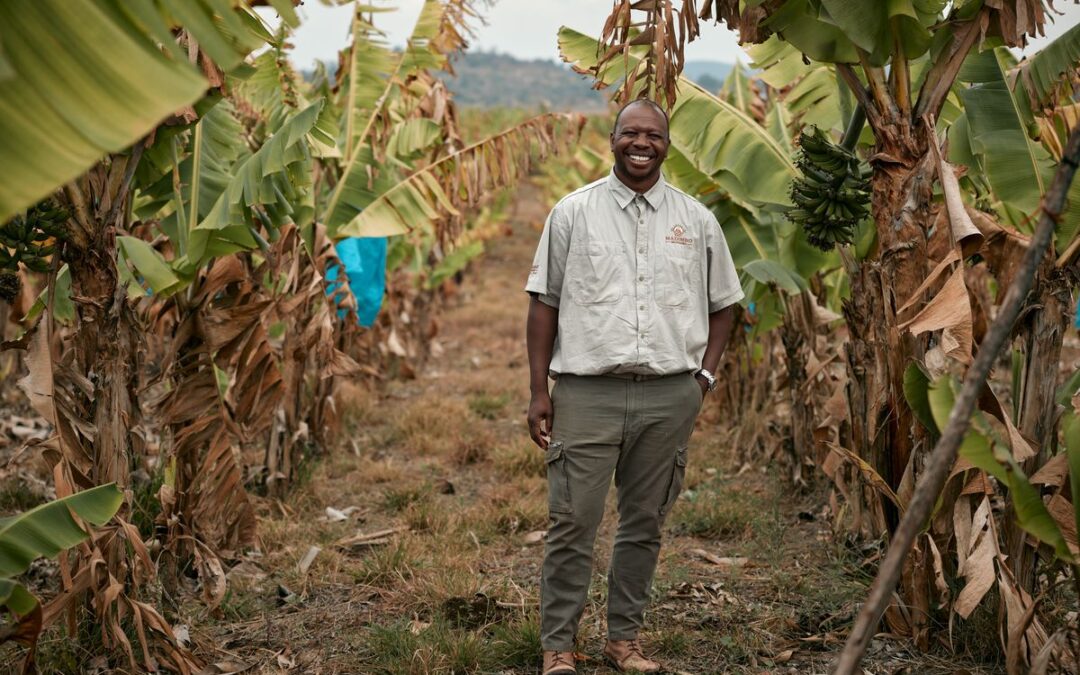
For the first time, more than 150 small-scale macadamia farmers in rural Limpopo will have access to a nut-processing plant, thanks to the vision of local commercial
macadamia and horticultural farmer Gene Likhanya and the SAB Foundation.
By Colleen Dardagan
What started as a conversation between a business consultant and a retired citrus farmer in the early 2000s has grown into a thriving commercial macadamia enterprise focused on small-scale farming growth and development, backed by the SAB Foundation.
The processing business under Gene Likhanya’s Madimbo Macs Processors and a community-based macadamia farming project at Ha-Mashau Village boasts a four-ton-per hour single-lane dehusker and a 40-ton drying capacity, which cost nearly R6 million to build.
Likhanya’s Madview Farm in Ha-Mashau has more than 5 500 macadamia trees, and the community co-operative – called Mac Swarm Group Primary Co-operative – represents 12 small-scale farmers working through a collaborative structure that supports common funding access, shared learning, aligned production goals and co-ordinated development support.
Love of farming
Likhanya, with a self-confessed love for farming, says when he started out in 2003, he knew there were serious barriers to success for small-scale farmers in this country. Small-scale intensive agriculture, particularly when economies of scale and technical know-how are limited, is an uphill journey, with many who are brave enough to try falling by the wayside.
In 2005, he began by planting Beaumonts on 1.5ha of communal land farmed by his family over generations. He planted not knowing how the macadamia nuts were priced nor how they were processed – but he was convinced there was money to be made farming the crop.
The trees were cared for by his mother and brother while Likhanya worked as a business and financial advisor for one of South Africa’s top financial services companies.
However, when Likhanya met his neighbour in the Nelspruit housing complex where he and his family were living, a partnership was formed that would see his vision and dreams come to fruition.
Valuable mentorship
Retired citrus and beef farmer Bruce Andrews said he got to know Likhanya first as a kind and gentlemanly neighbour. “We started chatting and he told me about the macadamia trees he’d planted on his plot in the Madimbo Valley. I had never farmed macadamias but there are many similarities between the successful production of fruit and nut crops. For example, land prep – the most important element of any successful crop farming operation,” Andrews said.
Likhanya said because of Andrews’ valuable mentorship and the SAB Foundation’s backing, he wanted to help others – as he has been helped – by providing technical training, structured support and knowledge based on the lessons he’d learned since planting his first macadamia trees.
“It was intimidating for me to approach Bruce and ask for help. But he answered all my questions and offered invaluable support. The commercial farmers sometimes called me Aluwani (Venda for ‘to grow’ or ‘to prosper’). They would say ‘Aluwani do this’, or ‘don’t do that’, and ‘space the trees like this or like that’. They helped me to avoid the common mistakes,” Likhanya said.
The 41-year-old describes his ancestral land in the Madimbo valley as arable, rich, valuable and God-given, but useless if the community cannot use it to empower their lives. “I know farmers here who have been harvesting macadamia nuts for 15 to 20 years and they still haven’t managed to make much out of it. They would say to me: ‘Something is wrong. The factory won’t accept my macs because of the quality’. They just never understood the value chain and what was acceptable to the market,” he said.
With the help of Andrews and others in the local farming community, Likhanya grew his 1.5ha to 17.5ha over time and diversified his operation to include bananas, avocados, mangoes, livestock and spinach.
“I was self-funded up until 2019 and although the money was running out, I knew there was business to be done in macadamias. But I needed to scale my operation. I knew the higher the production, the cheaper the processing costs, and the more leverage on pricing.”
At this point, he was invited to a farmers’ meeting in Johannesburg. “One of the speakers was from the SAB Foundation. Without a formal introduction I just took a chance and went up to her and introduced myself. I told her who I was and what I did and what I was trying to achieve.”
We could say the rest is history, but what that partnership has since achieved is more than significant.
Today, Likhanya mentors 12 small-scale macadamia farmers in the Madimbo Valley through a co-operative he set up with the help of the foundation.
The foundation has helped them with land preparation, access to water, young trees, and vegetable seedlings to plant between the growing trees. It is also envisioned that each of the farms will eventually extend to a more viable 5ha.
Leading farmer
The foundation has also helped Likhanya expand his Madimbo Agri Group operation by 30ha, which according to the foundation has solidified his standing as a leading farmer in his area. It was on this basis that the 12 small-scale farmers’ consortium was started, aimed at equipping them for sustainable success.
SAB Foundation Head of Programmes Itumeleng Dhlamini said Likhanya was already making an impact in his community via the Mac Swarm Group Primary Co-operative when the team met him in 2019. “It was easy for us to walk this journey with him,” she said.
“What we needed was to make sure he had the right business processes in place to operate as a formal business that could spearhead the group for collective success.”
But in 2021, South Africa’s macadamia industry came to a screeching halt as prices crashed by more than 50% due to a world glut on the back of the Covid-19 pandemic.
The value of a crop described as “white gold” for at least a decade, bringing in massive returns for farmers in this country, was suddenly halved. Growers, who had taken extensive commercial bank loans to develop orchards, were walking a tightrope.
Likhanya pragmatically describes the 2021 crash as “broader adjustment rather than structural decline” and said that the industry is on its way back although, he agreed, farmers were under significant pressure. Increased tariffs into the US and input costs e.g. fuel and fertiliser, have shot up by more than 100% since 2022 when Russia invaded Ukraine.
Further, the unbundling of the state’s power utility, Eskom, has seen above-inflation electricity price increases, adding to financial pressure for farmers, particularly those in the macadamia industry who irrigate.
“The lower price environment is creating real challenges from a capital-raising perspective. Investor sentiment tends to tighten during these cycles, and many funders are understandably more cautious while our sector stabilises,” he said
However, with military training in his background, Likhanya will meet the current obstacles with his customary disciplined attitude. “If you are disciplined you will do what you must do when it must be done – on good days and bad days. The agri-space is tough and there is so much I can’t control, like the weather, input prices, or the price I get for my crop. But quality is quality and if I am committed to producing quality, the rest will look after itself. It’s all well and good to be a passionate farmer, but I like to deliver as a businessman,” he said.

Another wasp is making waves in South Africa’s macadamia industry, this time a natural predator of the felted coccid, which has arrived in the country and is under quarantine readying for release.
The dominant regular predator of Australia’s naturally occurring felted coccid – now a significant pest in South Africa’s macadamia orchards – has arrived in the country and is being readied for battle in quarantine facilities at the University of Pretoria.
Entomologist Anthony King from the Agriculture Research Council, Plant Protection Research Institute, Roodepoort, travelled to Hawaii in July last year to collect three “little containers” carrying 59 wasps to start a captive breeding programme, now at an advanced stage with populations almost ready for release.
As in South Africa, the felted coccid (Acanthococcus ironsidei) is a problem pest in the macadamia orchards of Hawaii. The wasp was successfully introduced there in 2013, becoming an integral part of the island industry’s integrated pest management strategy. That work is now providing a base from which South African scientists can ready the predator for release into local orchards.
Scientists anticipate the introduction of the predatory wasps will make a valuable contribution to sustainably managing felted coccid infestations in the domestic macadamia sector.
Acanthococcus ironsidei is a very tiny sap-sucking insect host-specific to the macadamia. It has a short life cycle, meaning overlapping generations can be present in the orchards throughout a season. The pest causes branch and tree die-back, and while it doesn’t affect the quality of the nuts, it does reduce yield and infected trees need time to recover from infestation.
Speaking at SAMAC’s recent annual industry conference in KwaZulu-Natal, King said surveys carried out by the Hawaiian Department of Agriculture in 2013 had identified a species of wasp – Metaphycus macadamiae – which was found to be the dominant natural enemy of the macadamia felted coccid in Australia.
The female of the little dun-coloured wasp feeds on the felted coccid nymphs and lays her eggs in maturing females. The developing young then feed on the felted coccid female, killing it from the inside.
“In Australia, the macadamia felted coccid is considered a relatively minor pest that seldom requires active management. This is because the insect is suppressed by a suite of indigenous natural enemies, which maintain adequate control under most circumstances,” King said.
Explaining the protocol linked to the importation of the wasp into an “invaded” country, he said after the field surveys, the insect is quarantined and studied to make sure it has the necessary biological attributes before being exported. “Then that species has to undergo host specificity testing to make sure it doesn’t become a pest itself. Once that testing is complete you submit an application for release to the appropriate authorities,” he said.
Since its arrival, Metaphycus macadamiae has settled in well. The first objective of the project to establish a “culture” of the wasp has been completed, and host specificity testing on indigenous and economically important scale species that might be present in South Africa is under way.
“The first generation of South African-born wasps emerged in September 2024 with at least 11 generations, probably more, emerging since then. We have really concentrated on stabilising the population and growing the number of wasps in our quarantine facility while implementing the lessons we learned in Hawaii,” King said.
About 36 local scale species have been targeted for host specificity testing. These were prioritised based on their phylogenetic (evolutionary relationship) distance from the macadamia felted coccid.
King said two out of the 36 identified species from two different scale families, namely Diaspidiotus mesembryanthemae and Pulvinaria delottoi, were tested, with zero emergence where Metaphycus was introduced versus 32 individuals emerging from the control. “This is a good start and what it means for the industry is that a successful biological control programme will reduce the current over-reliance on insecticides for the control of Metaphycus macadamiae, and lessen non-target impact on existing natural enemies and pollinators in the orchards,” he said.
SAMAC has assisted with funding and support for the programme, with local macadamia growers helping with field work and the collection of infested material in their orchards.
King also thanked the authorities in Hawaii for their technical assistance and a supply of the insects for export to South Africa.
Article
Colleen Dardagan

Pictured Above: Hugo Bester
Macadamia farmers across South Africa are hailing the parasitoid wasp, Trissolcus basalis, as a deadly strike weapon in their war on stinkbugs. Improved nut quality is proof of the insect predator’s success, they say.
While Trissolcus basalis might be just half the size and width of a housefly, the parasitoid wasp is punching way above its weight in the fight against the stinkbugs so prevalent in South Africa’s macadamia orchards.
Lyle Wichmann, who has orchards inland of Zinkwazi Beach on the KwaZulu-Natal North Coast, says in the three years since he introduced the wasps into his 20- to 30-year-old trees, unsound nut percentages have dropped from 4%-6% of his annual harvest to less than 1%.

Pictured: Lyle
“Our initial attitude to pest control in our orchards – which had been severely neglected before I took over – was to go harder with chemical spraying. And yes, we would knock down the stinkbugs and other pests, but they would be back within days of the application,” he said.
Dr Brent Chiazzari, who is the Farmers Agri-Care Crop Advisor for that region, said the exponential growth in bio-security measures to control pests in the domestic orchards had taken off in the country since 2021. “Farmers are responding to international pressure to reduce harmful chemical use in their orchards in compliance with international certification standards such as Global Gap and the European Union’s Green Deal. They are also seeing the benefits of biosecurity on the growth of beneficial insect populations inside and outside their orchards.”

Dr Brent Chiazzari
Wichmann said a wake-up call for him personally was standing in his orchard during flowering and hearing nothing, just silence. “Now, it’s the opposite. The orchards are humming and buzzing with life,” he said.
So how do these tiny black wasps with four transparent wings go about their business, and why are they in the frontline in the fight against stinkbug infestations in macadamia orchards?
Hugo Bester, Technical Advisor for Koppert Southern Africa – a Dutch-based biological pest control company – opens a video on his smartphone, showing a small black-winged insect darting back and forth over a cluster of pale stinkbug eggs on the back of a macadamia tree leaf. “Look how excited she is,” Bester says. “She’s laying an egg in each of the stinkbug eggs; in a few days the eggs will start to discolour, which indicates that the stinkbug nymph is dead and the Trissolcus basalis larvae are feeding on them.”

The female wasp guards her brood until they hatch, and as soon as they do, the newly emerged males and females will mate, ready to start their lifecycle all over again. Because the insect is a strong flyer it distributes well in the orchard, Bester adds.
He then demonstrates how the wasps – branded as Greenshield – are transported by courier directly to farmers in small cardboard “bottles” from Koppert’s South African laboratories in Lanseria.
The deliveries are synced with other synergistic soft and targeted pest control methods, including sprays and drenches. “All of us work as a team to make sure the different remedies are delivered at the right time and in the right way. Timing is key,” he said.
Each bottle contains a “sugar patch” as food for the little creatures and is sealed with a white paper disc. Every bottle has a rubber band attached.
Bester removes the seal revealing a small hole, makes a loop with the rubber band, and attaches the container to a branch halfway up the macadamia tree. “One bottle contains 100 wasps, enough to cover 1ha. Ideally the tube is placed in the shade of the tree canopy, wedged between branches, and first prize is to have them near a batch of stinkbug eggs, but that’s not essential,” he said.
But timing the release was crucial.

Parasitised Eggs
“We recommend the first release in August and September depending on the season and the cultivar. The presence of stinkbug adults or eggs is not essential, but rather helpful, to build parasitic wasp populations. The wasps should be released in the middle of each hectare block every four to six weeks at 100 insects per hectare.”
Chiazzari hailed the wasps as integral to biosecurity strategies in macadamia orchards as they effectively controlled the egg phase of the stinkbug’s life cycle. “Greenshield is not a stand-alone control method of stinkbugs. We still use compatible chemical sprays in our arsenal to control the pest, but they are key,” he said.
Bester added that chemical sprays were necessary, particularly in the first year, to lower the stinkbug pest pressure.
The list of compatible chemicals includes:
Thiamethoxam
Pymetrozine
Imidacloprid
Methoxyfenoxide
He said scouting remained a vital part of a successful pest control programme. “Scouting for parasitised and non-parasitised eggs can indicate the success of the Greenshield releases. The non-parasitised eggs are cream-coloured while the parasitised eggs are brown or black,” he noted.
Wichmann said another plus factor was since the release of the wasps into his orchards, he had been able to slash the active ingredients in the chemicals he used. “I used to apply products with about four to five active ingredients, now it’s one or two. That is a huge cost saving and its better for the environment,” he said.
Dustin Cooper, whose seven- to eight-year-old orchards are also in the Darnall/Zinkwazi area, said in his mind the wasps were like security guards patrolling his orchards. “I think about them chipping away at the stinkbug numbers in the background. I might not be able to see them, but I know they are there. Doing their work. Guarding the trees,” he said.
Written by Colleen Dardagan